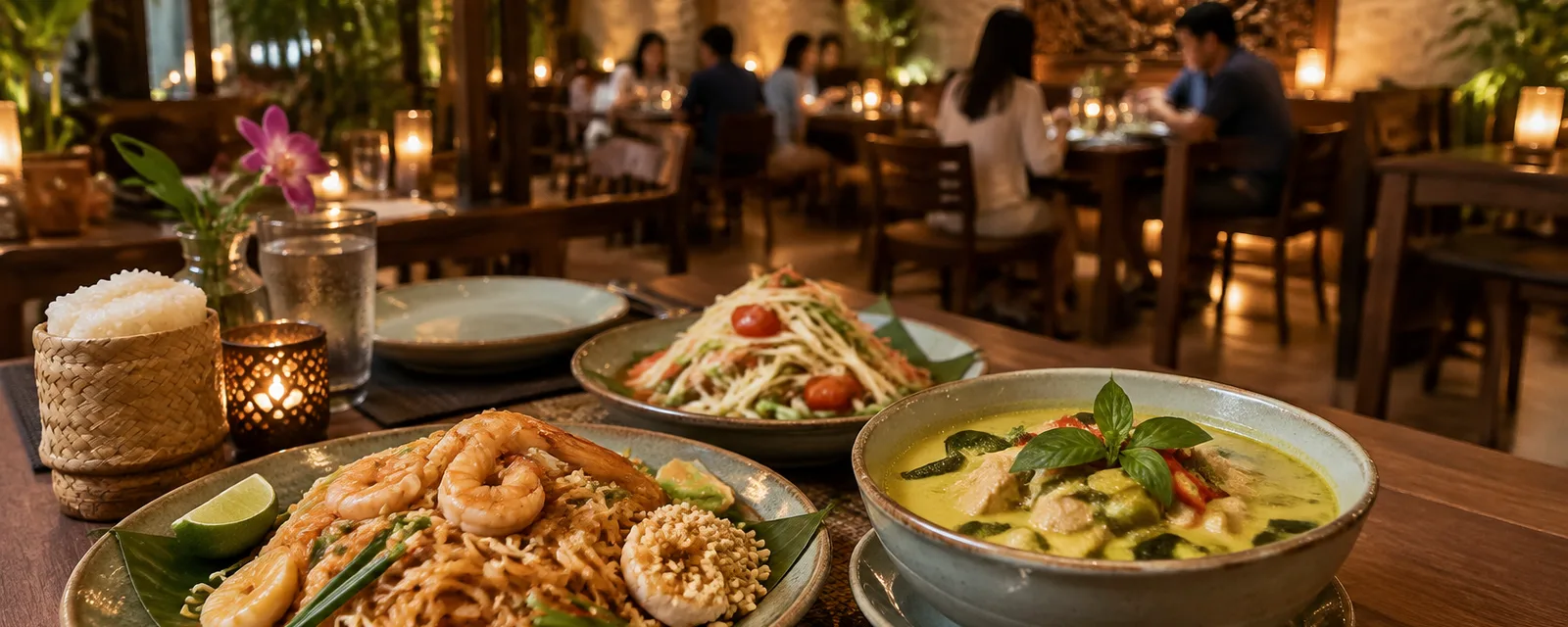
From the kitchen to branch close.POS, tables, kitchen display, delivery, stock and accounting in one system.Designed to compare recipe cost with actual cost and show where stock went,and to keep selling when the internet drops.
You know total purchases but not how much ingredient sales should have used, so real cost runs high and the causes are hidden.
How it's designed to workDeducts ingredients by recipe the moment the kitchen starts a dish, compares with actual use from stock counts, and splits variance by ingredient, with waste and staff meals by reason.
Items are thrown away unrecorded, monthly counts never match, and nobody knows why.
How it's designed to workWaste is recorded in one step from the kitchen screen with a reason, with manager approval over a limit, blind counts, and approval of large count differences.
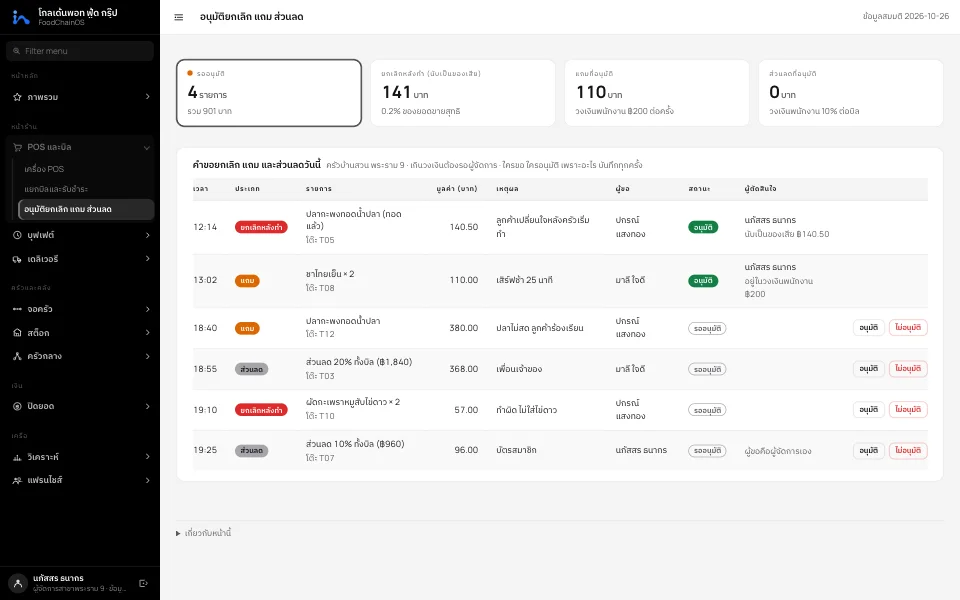
Staff cancel bills after the kitchen cooked, comp beyond their authority, and the cash drawer does not match.
How it's designed to workA void after cooking needs a manager PIN and counts as waste, comps over the limit need approval, nobody approves their own item, and reports show who and why.
Platform commission is mixed with discounts, and nobody knows whether a platform payout matches the orders.
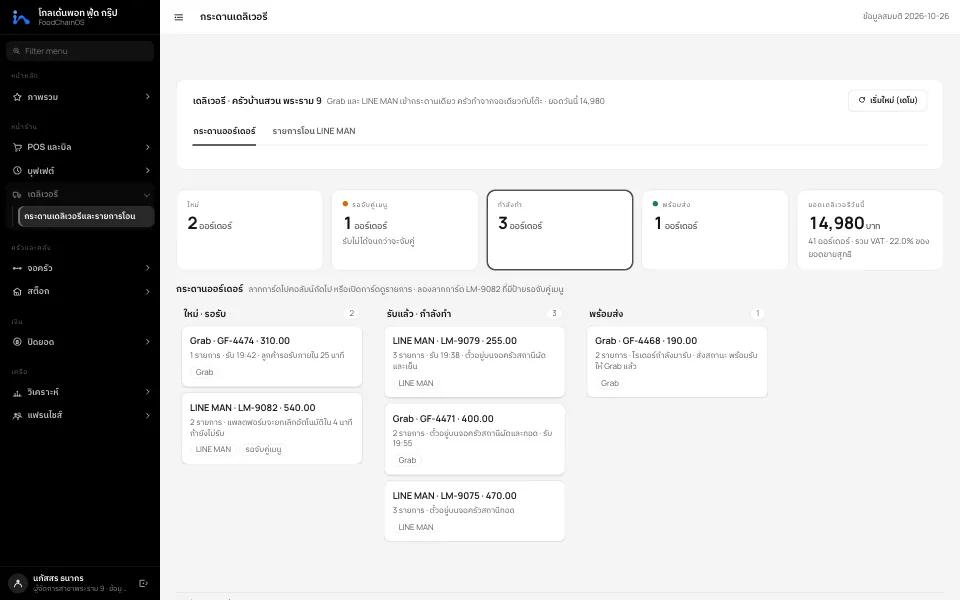
How it's designed to workTakes delivery-platform orders into the kitchen, books full-price sales with commission as an expense, matches weekly payouts to every order and shows net delivery margin.
Cash is counted by hand, venues open past midnight split days wrongly, and accounts get figures late.
How it's designed to workCounts each shift by payment type, lets a trading day cross midnight, and sends revenue, tax, service charge and payments to accounts in one close with a deposit slip.
Branches order over chat, the central kitchen totals by hand, and shortages are discovered late.
How it's designed to workBranches order from suggested par quantities with a cut-off time, the central kitchen sees ingredient shortages before production, and batches carry production and expiry dates.
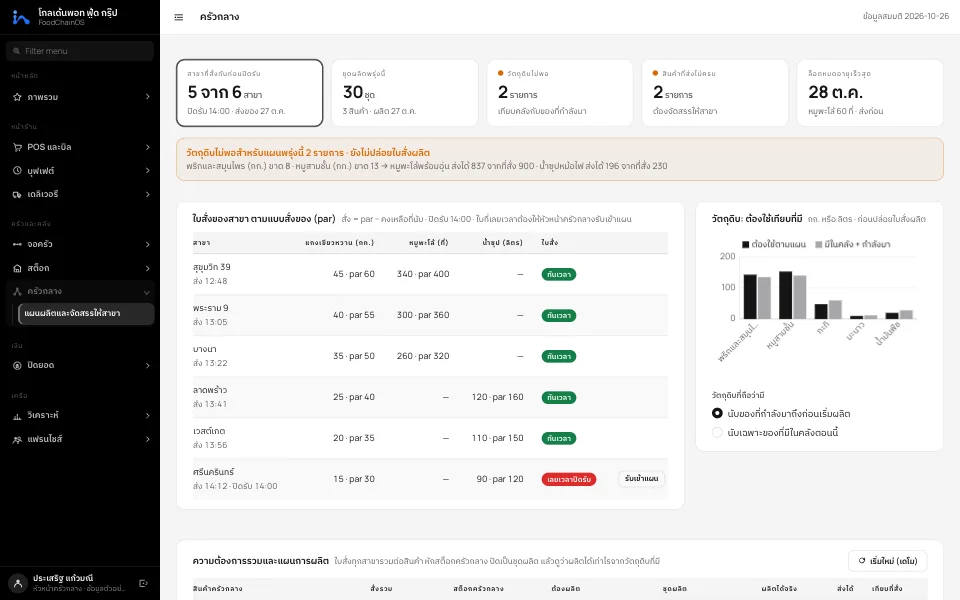
Prototype screens in the Thai-language UI, with sample data.
Designed so a cancel after the kitchen starts is recorded as waste, not a reversal, because the ingredients are already gone.
Designed for multiple order rounds, moving, merging and splitting tables, without losing the order history.
Designed to freeze the recipe version on each sold line, so editing a recipe today does not change last month's sales cost.
Designed so every channel reaches the same kitchen stations on the same clock.
Designed so POS and order taking continue offline, and the kitchen display keeps receiving in-store orders.
Designed so company branches transfer stock, franchise branches are sold to with tax invoices, and royalty is computed from actual sales.
Designed for table POS, easy day close and an owner view on mobile.
Designed for a kitchen display, QR ordering, timed buffet, delivery orders into the kitchen, recipe-based food cost against actual, members and promotions.
Designed for central pricing with branch price ranges, joint purchasing, branch-to-branch transfers and food cost compared across branches.
Designed for branch orders by par, central kitchen production planning and batches, cold-chain trucks, branch audits, traceability and recall, franchise royalty and cross-brand profit.
Designed for several virtual brands from one kitchen, platform menu matching and net delivery margin.
Single restaurants, cafes and small delivery kitchens; one branch.
Venues with buffet, QR or delivery, and multi-branch groups.
Multi-brand chains, central kitchens and franchises (FoodChainOS).
Capabilities describe design scope; performance figures are design targets, not measured results.
Pricing is agreed per project.