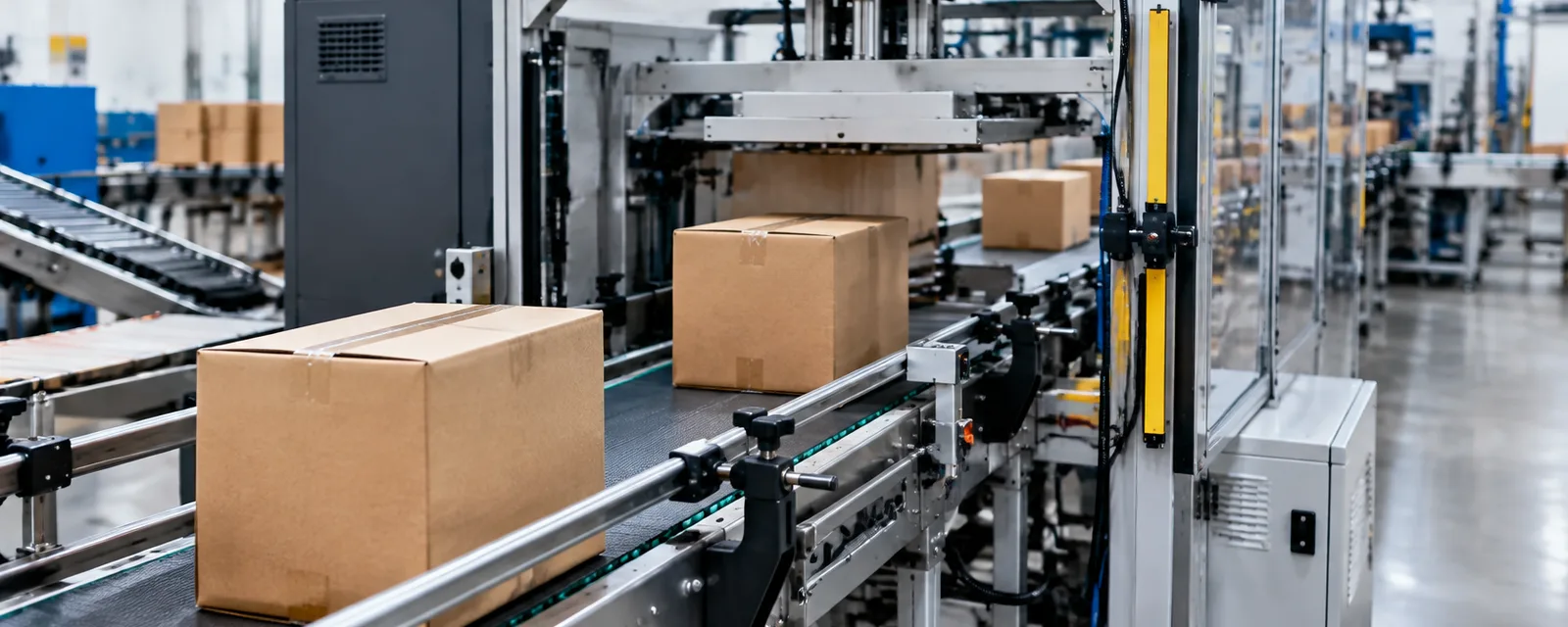
An ERP for Thai factories.Designed to run make-to-order and make-to-stock in one system,give delivery dates with history and confirm work at the machine without paper,trace every lot and serial, and show the margin of each order.
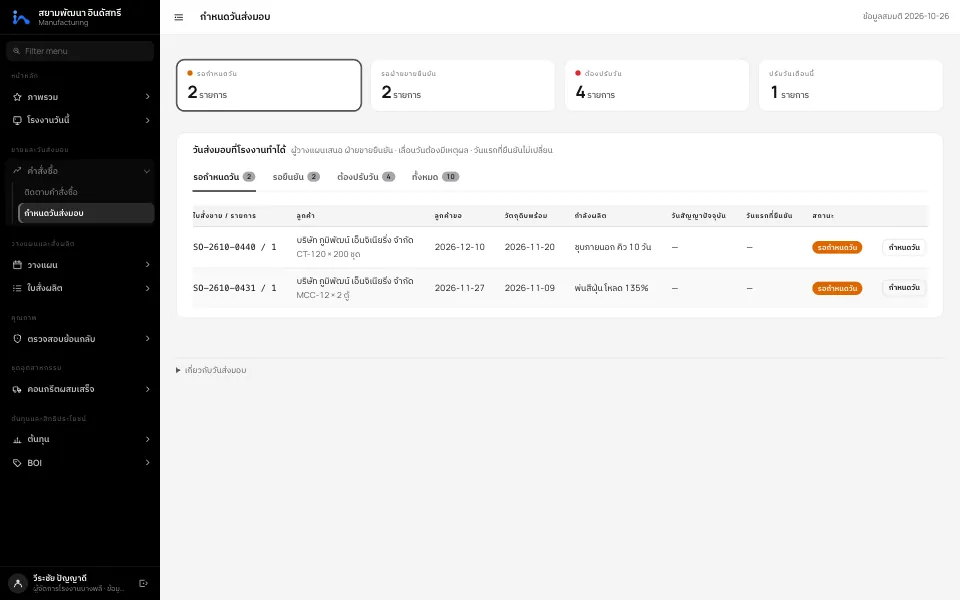
Sales promise a date on their own, the plant finds out later, and customers phone every day.
How it's designed to workA sales order creates a linked work order, the planner proposes the delivery date, sales see every step on one tracking page, and each promised date is kept in history.
Planning in spreadsheets ignores real orders and raw materials get ordered twice.
How it's designed to workForecast, reorder points and MRP that net real orders against the forecast; the planner accepts, splits or rejects each suggestion.
Production reports reach the office the next day and a wrong digit throws stock off.
How it's designed to workA machine-side terminal: scan the job, start and stop, record output and scrap with reasons, auto-consume materials; a repeated tap records only once.
Nobody knows which raw material lot went into which product and to whom it was shipped.
How it's designed to workTraces from the supplier lot (heat number) to every customer, and from a serial number back to key components, and opens a recall that holds stock.
Costs are averaged over the month and loss-making orders hide inside the total.
How it's designed to workShows actual cost per order split into material, labor, machine and subcontract, compared with standard cost as price, usage and efficiency variances.
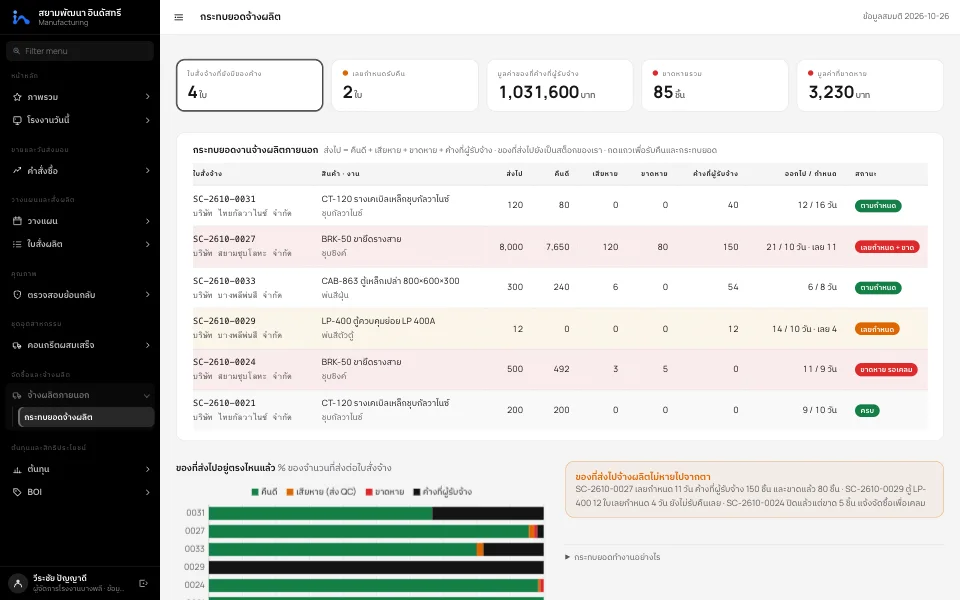
Parts sent out for plating or painting are not counted back in and nobody knows.
How it's designed to workAn outside step raises the subcontract order, stock sent out stays ours, and on return the system reconciles sent, returned, scrapped and lost.
Prototype screens in the Thai-language UI, with sample data.
The policy is a setting per item and plant, not separate software, so one item can be made to order in one plant and to stock in another.
Every promised date records its basis, who set it and why it moved; on-time delivery is measured from the first date confirmed to the customer.
Big-button terminal with barcode scanning and posting that never doubles; small plants can use a shift confirmation page on the desktop instead.
Ready-mix concrete, concrete products and refrigeration equipment each add their own screens and records on the same system.
Designed to carry TIS license numbers on test results, license renewal reminders, and BOI formulas with raw-material cut-off (Enterprise).
Excess scrap, purchase orders over limit, credit release and credit notes need a second person, and every entry has a history.
Sales order linked to work order, order tracking page, actual cost per order, outside plating or painting, toll manufacturing from customer material.
Forecast, MRP, work center load, standard cost and variances.
Pour orders, mix ticket per truck, dispatch board, aggregate moisture, returned concrete, 7/28-day cubes, billing from signed tickets, cost per m3.
Good, grade B and broken yield, curing board, test certificates with TIS numbers, project call-offs with retention.
Serial numbers and key components, test bay, refrigerant log, handover to service.
BOI production formulas and raw-material cut-off, maximum stock check, multi-plant MRP, job sequencing board.
Single plant, mainly make-to-order
Mid-size plants, make-to-stock, with industry packs
BOI exporters and plant groups
Capabilities describe design scope; performance figures are design targets, not measured results.
Pricing is agreed per project.