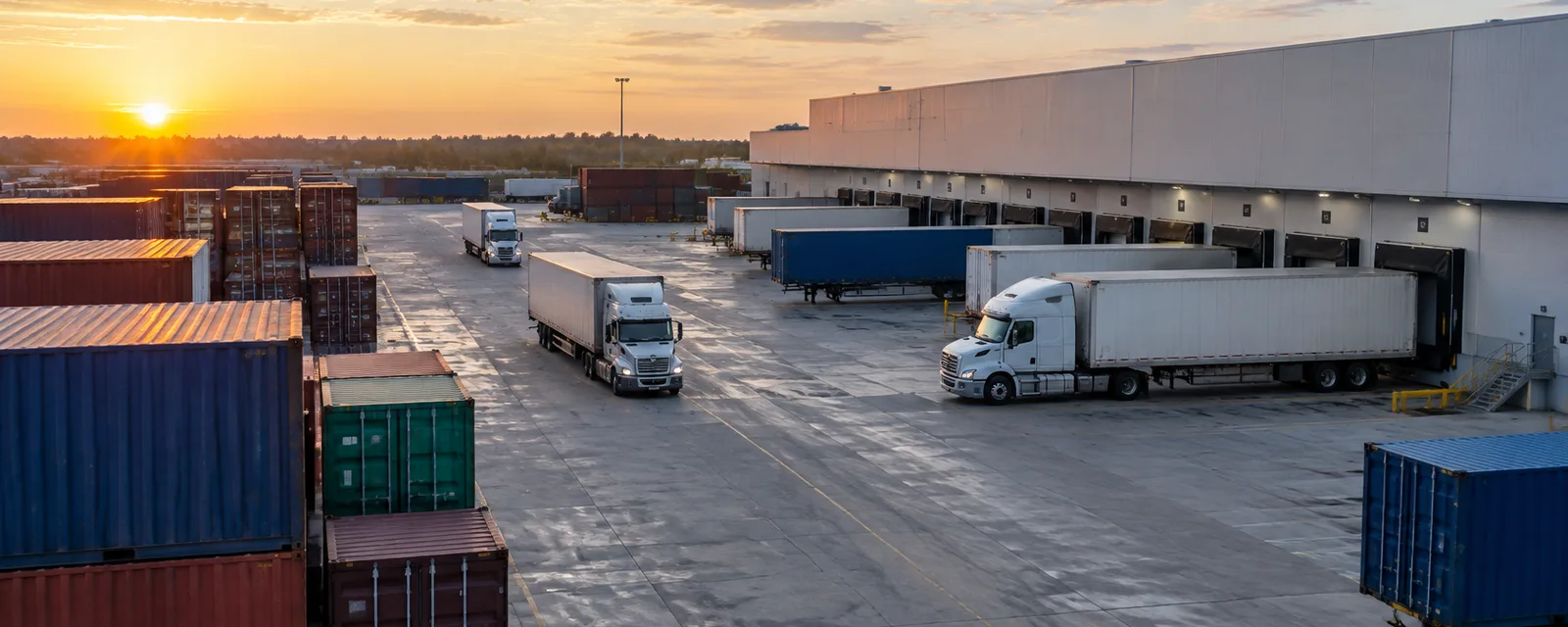
An ERP for Thai logistics.Designed to take orders, dispatch, track, prove delivery, forward, clear customs, store and bill in one system.A vehicle leaves only after the release gate, and a verified POD becomes an invoice request.Job profit is visible before close.
Freight, subcontract truck and port costs arrive later in lumps mixed across customers; losses show up at month end.
How it's designed to workEach job has one job file holding revenue and cost, showing gross profit and whether cost is complete; it cannot be closed while cost is missing.
Delivery notes come back a week late, invoices cannot go out and cash is stuck.
How it's designed to workThe driver photographs the POD in the app, operations verify it, and an invoice request follows the customer billing policy.
Insurance, road tax or license problems are found at an inspection or after an incident.
How it's designed to workA release gate checks vehicle documents, driver license, pre-trip inspection and dangerous goods; a failed check cannot be released and there is no skip button.
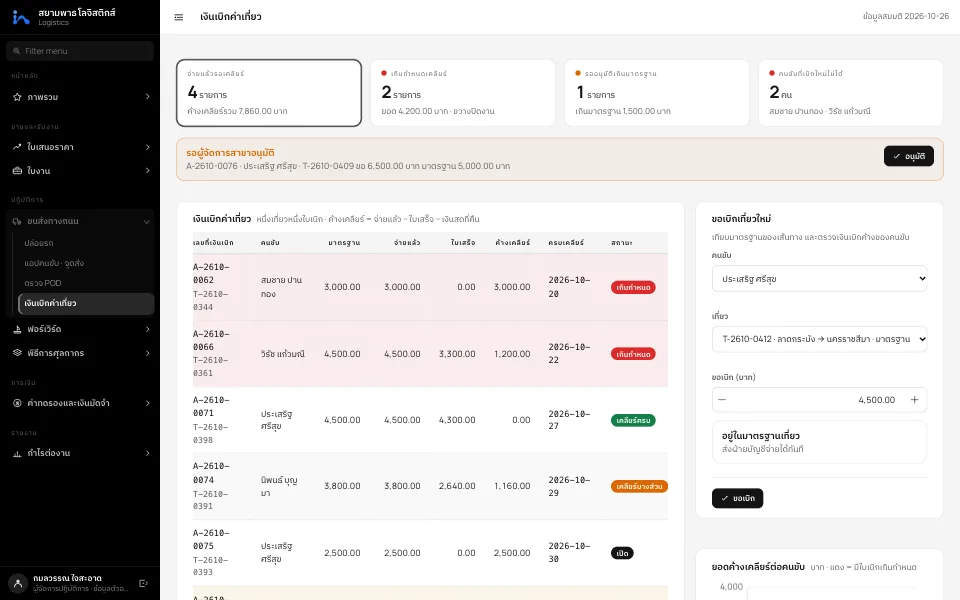
Cash stays with drivers, receipts get lost and nobody knows what each trip cost.
How it's designed to workAdvances are tied to the trip, drivers photograph receipts in the app, over-standard advances need approval and overdue ones block new advances.
Duties and import taxes paid on behalf of customers get booked as cost or revenue, so they are not fully recovered.
How it's designed to workDisbursements are separate pass-through items billed at actual cost, offset against customer duty deposits, with ageing tracked.
Missing documents, expired permits or insufficient BOI quota are found at the port while container charges run.
How it's designed to workDocument checklists from templates, a declaration that cannot be submitted until complete, and remaining quota and container free days shown first.
Prototype screens in the Thai-language UI, with sample data.
One freight invoice for several customers is allocated to house documents by CBM or chargeable weight, and the parts sum exactly.
Customs, haulage and storage sit in a single job file with a single profit.
The quotation shows margin per line, and a price below the floor needs approval.
Vehicle documents, driver license, pre-trip inspection and dangerous goods are checked at release, not after the fact.
A verified POD is the start of billing and the evidence when a claim arrives.
Disbursements, duty deposits and COD collected by drivers are always kept apart from revenue.
Dispatch board, release gate, driver app with POD, trip-linked advances, fuel, billing after POD, COD.
USD quotes with margin, bookings with cut-off, HBL/MBL, LCL consolidation with master cost allocation, containers and free days, pre-alert, arrival notices.
Declaration desk, mandatory document checklists, BOI quota, disbursements and duty deposits, tariff library per customer.
Dock schedule, receiving, putaway, scanner picking, lot-level holds, minimum shelf life, monthly storage billing without double charging.
Room-by-room survey app, estimates, crew and crane planning, stage acceptance before billing, retention.
All of the above in one job file, across several branches and companies.
Small trucking operators and small customs brokers
Forwarders, customs brokers, multi-branch carriers, single-warehouse 3PL and movers
Integrated logistics, multiple warehouses and multiple companies
Capabilities describe design scope; performance figures are design targets, not measured results.
Pricing is agreed per project.